
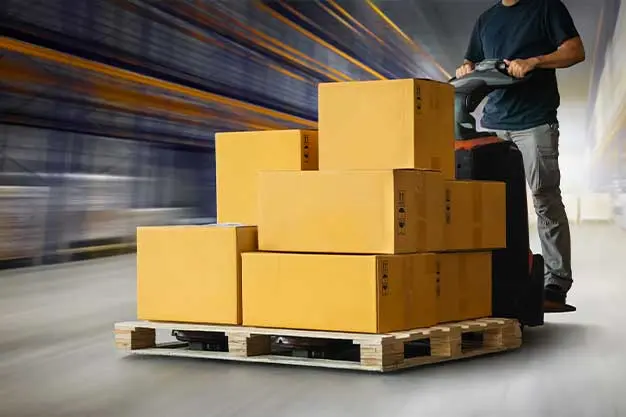
Actual Weight vs Volumetric Weight: Shipping Guide
Actual weight vs. volumetric weight. This is a concept that many people who don’t do regular international shipping struggle to understand every time they come across it. You’ve probably bumped into a shipper who asks about the actual and volumetric weights of your package when shipping a parcel overseas. Then it got you wondering what could these weights be. Well, most people only know about pounds (lbs.) or kilograms (kgs).
Shipping goods internationally depends on various factors especially when choosing the shipping mode, prices, and other additional services. In the context of courier service providers and freight industries, volumetric weight is key information used for billing the actual space occupied by goods in transit. What about the actual weight of the package?
In this informative shipping guide, we are going to demystify the facts around actual and volumetric weights. We’ll also address their significance, the impact they impose on your shipping costs and how to go about calculating weights accordingly. So, without further ado, let’s hop right into it!
What Is an Actual Weight?
What is Volumetric weight?
When calculating weight, confusion starts to kick in for most people when the subject changes to volumetric weight. Also known as the dimensional weight, volumetric weight is the weight of an object based on its volume with consideration to its shape and size. There are formulas used by shippers to calculate volumetric weight, which is then used to determine the chargeable shipping cost. This measurement will mostly be used when a package is disproportionately bigger than its actual weight.
Perhaps you’re wondering, “Why can’t shippers just use the actual weight?” The reason is that in the shipping industry, every inch of space matters. There will always be packages with much lower actual weight but occupy larger volumes. If shippers were to use the actual weight only, then they would lose a lot of money on disproportionately bigger but lighter items.
Therefore, don’t be surprised that a shipment of feather pillows costs more to ship than a similar shipment of mobile phones.
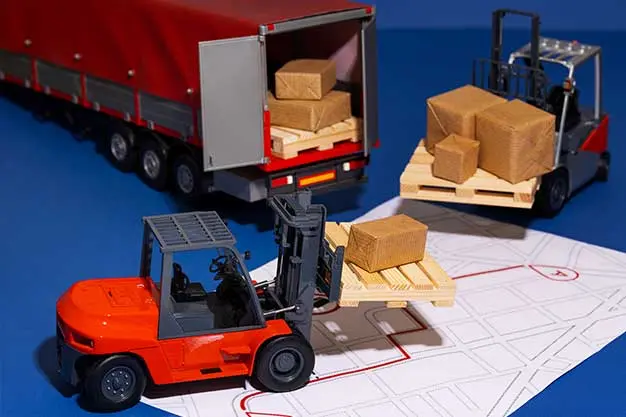
How to calculate volumetric weight
When it comes to calculating volumetric weight, the parameters used often vary by the transport mode and freight forwarder. Using a volumetric weight formula involves determining the volume of the package first by multiplying the length by width by height. The result is then divided by a predetermined divisor. Here’s how to calculate volumetric weight:
a) Measure your package’s length, width, and height in centimetres or inches.
b) Multiply these dimensions to find the volume of the package.
c) Divide the result by the dimensional factor (divisor), which often varies according to a shipper.
(30.78” x 23.45” x 17.50”)/170 = 74.30
Volumetric weight calculator
The shipping carrier will the calculate weight difference to find out which one is higher between actual and volumetric. If the latter is higher than the former weight, the shipper will charge you based on the former. Every shipper has their predetermined rate for different categories of volumetric weights. You can therefore do this calculation beforehand to find an estimated figure you’ll pay for your package to its destination.
Actual Weight Vs. Volumetric Weight - What are The Practical Implications?
Light bulky packages
Heavy compact packages
Actual Weight vs. Volumetric Weight – Which One Favours a Buyer?
As we’ve seen, the chargeable weight is one that weighs more between the actual and volumetric weight. So, none of these weights favours the customers since shippers will choose the higher one. But does that leave you at the mercy of shipping carriers? Absolutely not, especially if shopping abroad and want to ship your purchased items to your home country.
Say for instance you‘ve seen a George Foreman 25820 Large Fit Grill on Amazon.co.uk. A piece will cost you about £51.50, which sounds like a big saving until you look at the shipping option. That may pump up the cost to over £100, a whopping £48.50 more. Only the big-hearted buyer would willingly pay that much. So, the right move is to find a reputable freight forwarder to ship your GF 25820 to your home country.
Unlike shipping carriers, a freight forwarder like Jetkrate will consolidate your purchase with other packages to your home country. That will significantly cut down the shipping costs in the sense that every buyer pays a fraction of the total shipping cost for the entire package.
And if you’re in a shopping frenzy, even the better; Jetkrate will give you a UK address to send your GF and any other purchase. When you’re done, all your goods are consolidated into one package to eliminate unnecessary space and cut down on the volumetric weight. And that is how you wittily slash your shipping costs when buying high-end products from online stores abroad.
How to Optimize Your Shipping Costs

1. Go for efficient packaging
2. Find the right shipping carrier
3. Consolidate your shipments
Does Volumetric weight offer any advantage to shoppers?
Summary
To sum it up, getting a gist of actual weight vs. volumetric weight can help manage costs when shipping. While actual weight is the physical weight of an object, volumetric weight is the volume divided by a predetermined divisor. Shippers will use the higher weight to determine the chargeable shipping cost.
In a bid to reduce your costs, stay up to date with your carrier’s practices and rules, optimize your packaging, and know the applicable shipping rules. Better yet, opt for a customer-centric freight forwarder like Jetkrate to effectively optimize and consolidate your package. This can significantly cut your shipping costs and make it easier to acquire high-end products at amazingly low prices.