
10 min. read
Can You Buy and Ship a Laptop Internationally? A Practical Guide for Online Shoppers
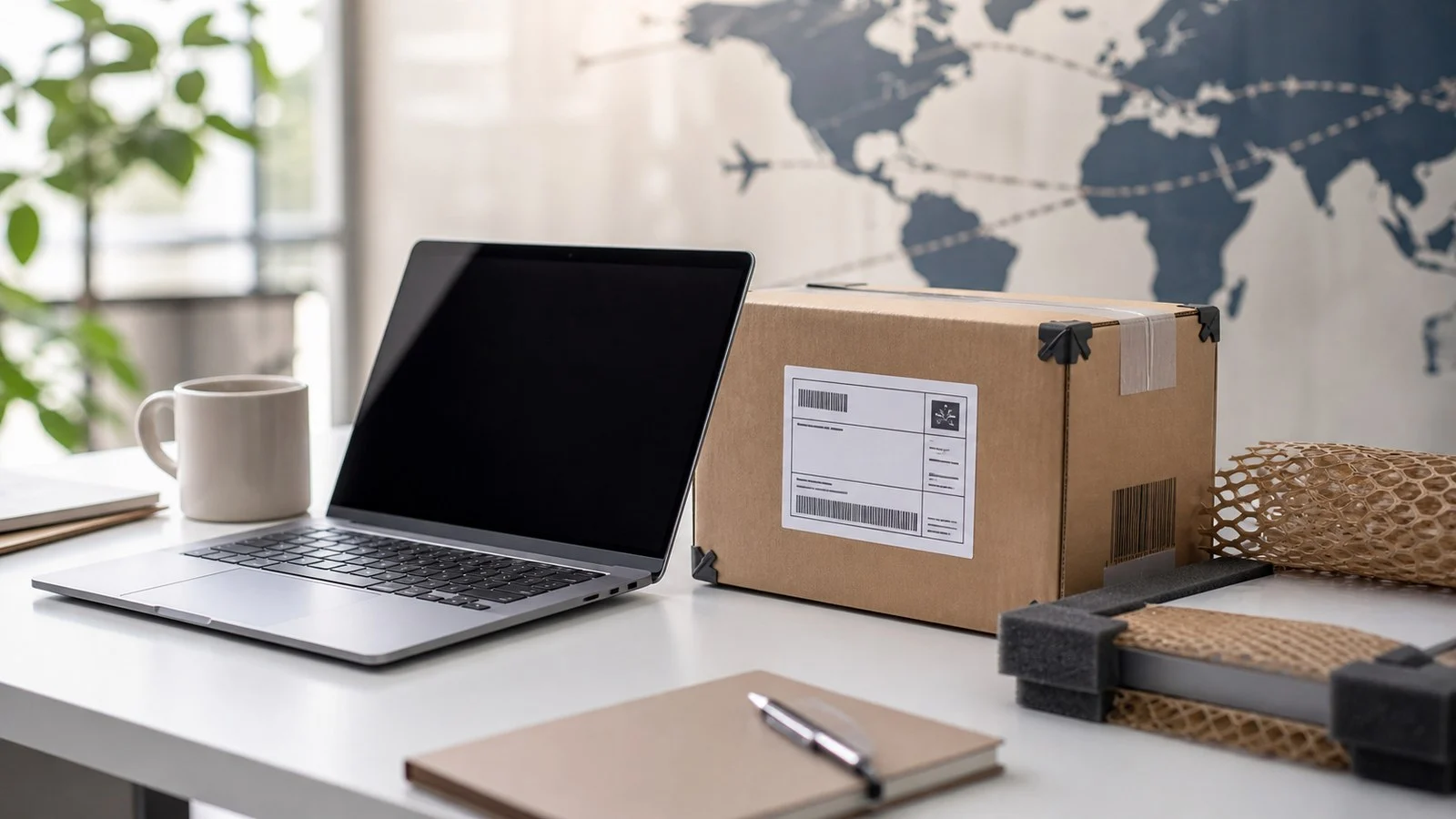
Yes, you can often buy a laptop from an overseas store and ship it internationally, but it should not be treated like an ordinary parcel. Laptops are high-value electronics, and most modern laptops contain lithium-ion batteries. That means route availability, carrier rules, packaging, customs documents and destination-country import requirements all matter.
This guide is written for shoppers using package forwarding, not for people relocating personal belongings or sending an old laptop in a suitcase. If you want to buy a laptop from a retailer in another country and forward it to your home country, here is what to check before you place the order.
Quick answer: can you ship a laptop internationally?
Usually, yes, provided the laptop is eligible for the route and carrier being used. A laptop is generally easier to assess when it is a new retail purchase, packed in its original manufacturer packaging, with the battery installed inside the device.
The shipment becomes more complicated if the laptop is used, refurbished, damaged, recalled, missing documentation, bundled with spare batteries, or being sent to a country with tighter restrictions on battery-powered electronics.
Before buying, check that:
- the retailer can deliver to your Jetkrate warehouse address
- the laptop battery is installed inside the laptop, not travelling loose
- the parcel does not include spare laptop batteries, power banks or other loose lithium batteries
- the laptop is not damaged, swollen, recalled or non-compliant
- the destination country allows the import of the product
- you have a proper invoice or order confirmation showing the product, value and currency
- the total landed cost still makes sense after freight, GST/VAT, duty and possible clearance costs.
When buying a laptop overseas can make sense
Buying a laptop internationally can be worthwhile when your local market has limited stock, a specific configuration is not available, a retailer overseas has a better price, or you want access to a regional launch before it reaches your country.
It can also be useful for business buyers who want a particular model, processor, keyboard layout, colour, screen option or storage configuration that local retailers do not carry.
However, the overseas price is only one part of the decision. A cheap laptop can become poor value once you add domestic delivery to the warehouse, international freight, customs charges, GST or VAT, optional goods protection, return risk and warranty limitations.
How laptop package forwarding works with Jetkrate
Package forwarding is designed for online shoppers who want to buy from stores that do not ship directly to their country, or where the retailer's international shipping option is limited or expensive.
With Jetkrate, the basic international package forwarding workflow is:
- Create your Jetkrate account.
- Choose the country you want to shop from, such as the United States, United Kingdom, Australia or New Zealand, subject to warehouse and route availability.
- Use your Jetkrate forwarding address at checkout with the retailer.
- The retailer sends the laptop to the Jetkrate warehouse.
- Jetkrate receives and records the parcel in your account.
- You choose the available forwarding option, add any suitable services and complete the shipment details.
- The eligible parcel is dispatched to your final address.
This is different from courier booking. Package forwarding is for purchases sent from a retailer to a Jetkrate warehouse first. Courier booking is for parcels already with you that need to be sent internationally. The rules, available services and acceptance checks can differ between the two.
The pre-purchase checklist for laptops
Do these checks before you buy. They can save you from an expensive parcel being delayed, refused, returned or uneconomical to ship.
1. Check the product listing carefully
Confirm the exact model, battery type, battery capacity, product condition, warranty terms, plug type and keyboard layout. Most consumer laptops use lithium-ion batteries, but large gaming laptops and workstation models may have higher-capacity batteries than standard ultrabooks.
2. Avoid spare batteries and power banks
Do not bundle a laptop purchase with loose replacement batteries, spare batteries or power banks unless Jetkrate has confirmed the route and product are acceptable before you order. Loose lithium batteries are generally far more restricted than batteries installed inside the device they power.
3. Check the destination country's import rules
The carrier may be able to transport a parcel, but customs in the destination country still decides whether the goods can enter and what charges apply. Some destinations may ask for additional information, a tax number, proof of value, an import permit or a more detailed product description.
4. Estimate the full landed cost
Do not compare the overseas product price against your local price in isolation. Include the retailer price, domestic delivery to the warehouse, Jetkrate service costs, international freight, optional protection, GST/VAT, duty and possible customs or clearance fees. Jetkrate's package forwarding pricing guide is a useful starting point.
5. Think about returns and warranty
International returns can be expensive, especially for lithium battery devices. Check whether the manufacturer offers international warranty support in your country and whether the retailer accepts returns from overseas buyers.
Lithium battery rules: why laptops need extra care
Most laptops contain rechargeable lithium-ion batteries. These batteries are regulated in air transport because damaged, defective, overheated or incorrectly packed batteries can create a fire risk. Jetkrate's guide to shipping lithium batteries internationally explains the difference between loose batteries, batteries packed with equipment and batteries contained in equipment.
For a typical laptop shipment, the most workable battery category is usually a battery contained in equipment. In simple terms, that means the battery is installed inside the laptop it powers. A loose laptop battery or power bank is a different risk category and may be refused on many routes.
As a practical rule, avoid forwarding:
- loose lithium batteries or replacement laptop batteries
- power banks
- damaged, swollen, leaking, recalled or refurbished batteries with unclear condition
- battery-powered devices with poor or missing product information
- multiple laptops in one parcel without checking quantity limits first
- products where the retailer has removed the battery and packed it separately.
If the laptop is high-value, unusual, refurbished, second-hand, sold by a marketplace seller, or has unclear battery information, ask Jetkrate before buying. It is much easier to check eligibility before the parcel reaches the warehouse than after the money has already been spent.
How a laptop should be packed for international forwarding
For new laptops, the manufacturer's original packaging is usually the best starting point. The laptop should sit firmly in its inner packaging, with the screen, keyboard, edges and charger protected from movement and impact.
For international movement, the retail box may also need a strong outer carton with sufficient cushioning. This protects the manufacturer box, helps reduce impact damage and gives carriers a suitable surface for labels and handling marks.
If a laptop is already at a Jetkrate warehouse, be careful with repacking requests. Repacking can be useful when a retailer sends a small product in an oversized box, but it is not always suitable for fragile, high-value or sealed electronics. The safest parcel is not always the smallest parcel.
Can you consolidate a laptop with other purchases?
Sometimes, but use common sense. Consolidating eligible items may reduce repeated base charges, but a larger combined parcel can also increase chargeable weight. It can also introduce risk if the other products are fragile, liquid, magnetic, flammable, restricted or poorly packed.
For laptops, consolidation is usually safest with simple accessories such as a sleeve, mouse, keyboard cover or cable, provided those items are also eligible for the destination. Do not consolidate a laptop with perfume, aerosols, nail polish, liquids, loose batteries, power banks, flammable products or anything listed as prohibited or restricted.
Customs documents and declared value
Laptop shipments need accurate customs information. Keep your retailer invoice or order confirmation and make sure the declared value reflects what you actually paid. Undervaluing electronics can cause delays, penalties, seizure, insurance issues or disputes if the parcel is damaged.
Your shipment details should usually include:
- a clear product description, such as 'laptop computer' rather than 'electronics'
- the brand and model where possible
- the item condition, such as new, refurbished or used
- the purchase value and currency
- the quantity
- the country of origin if known
- battery information if requested by the carrier or route.
Many customs systems use HS codes to classify goods. Laptops are commonly treated as portable automatic data processing machines, often under heading 8471.30, but the exact classification and duty outcome can depend on the destination country and product details. If in doubt, use the retailer's documentation, the destination customs authority, or a qualified customs broker.
What affects the cost of shipping a laptop internationally?
The final cost depends on more than the laptop price. Key variables include:
- origin and destination country
- actual weight and parcel dimensions
- volumetric or dimensional weight
- carrier and service speed
- fuel, remote-area or clearance surcharges where applicable
- optional goods protection or insurance
- customs duties, GST/VAT and local import fees
- whether consolidation or repacking is safe and worthwhile.
Laptops are usually compact but valuable. That means the freight cost may be manageable, but taxes, warranty risk and insurance decisions can have a bigger impact on whether the purchase is worth it.
Is it worth buying a laptop from overseas?
It can be worth it when the overseas model is genuinely unavailable locally, the price difference is large enough after all landed costs, or the specifications are materially better than local options.
It may not be worth it when the local price is only slightly higher, the warranty is not valid in your country, the retailer has poor return support, or customs and shipping costs remove the saving.
A good rule is simple: compare the full landed cost and the risk, not just the product price.
Step-by-step: the safer way to buy and forward a laptop
- Find the exact laptop you want and confirm the model, battery details, warranty and condition.
- Check Jetkrate's prohibited items guidance and ask support if anything about the battery, route or product condition is unclear.
- Estimate the forwarding cost using realistic parcel weight, dimensions and destination details.
- Check likely destination-country GST/VAT, duty and clearance costs.
- Place the order using the correct Jetkrate warehouse address.
- Keep the retailer invoice and product confirmation email.
- When the parcel arrives, review the parcel details in your Jetkrate account.
- Choose a suitable forwarding option and consider goods protection for high-value electronics.
- Track the shipment and respond quickly to any customs information requests.
FAQs about shipping laptops internationally
Can I ship a laptop internationally?
Often, yes. A laptop can usually be assessed for international shipping when the battery is installed inside the device, the product is not damaged or recalled, the route accepts lithium battery devices, and customs information is accurate.
Can Jetkrate forward a laptop purchased from an overseas retailer?
Jetkrate can help forward eligible laptop purchases from supported warehouse countries, subject to retailer delivery, warehouse availability, carrier acceptance, battery rules and destination-country import requirements.
Can I ship a laptop with a lithium battery?
In many cases, yes, when the lithium battery is installed inside the laptop and the shipment meets the route's requirements. Loose or spare lithium batteries are a different category and are much more likely to be restricted or refused.
Can I ship a spare laptop battery or power bank with my laptop?
Generally, no. Loose lithium batteries, spare batteries and power banks are commonly restricted and generally cannot be shipped internationally through Jetkrate. Check before buying any battery-only product.
Should I remove the laptop battery before shipping?
No. Do not remove a laptop battery just to ship the laptop. A battery installed inside the device is usually easier to assess than a loose battery packed separately. If you are sending an older laptop with a removable battery, check the route requirements before booking.
Can I forward a used or refurbished laptop?
Possibly, but it can be harder to assess. Used and refurbished laptops raise extra questions around battery condition, product value, warranty, documents and customs valuation. Damaged, swollen, defective or recalled batteries should not be shipped.
What documents do I need?
At minimum, keep the retailer invoice or order confirmation showing the product, value and currency. Depending on the destination, you may also need extra customs information, battery details, a tax ID, an importer number or proof of payment.
Can I consolidate a laptop with other items?
Sometimes. Consolidation should only be used where the other items are eligible and where combining parcels does not increase risk, damage likelihood or chargeable weight. Avoid combining laptops with liquids, aerosols, flammable products, loose batteries or anything restricted.
Is goods protection worth it for laptop shipments?
For high-value electronics, it is worth considering. Make sure you understand what is covered, what is excluded and what evidence is needed if a claim is required.
Final takeaway
A laptop can be a good product to buy internationally, but only when the full route makes sense. Check the battery category, retailer documentation, packaging, destination import rules, landed cost and warranty before ordering.
Jetkrate can help with eligible laptop purchases by giving you a local forwarding address, receiving the parcel, and letting you choose suitable forwarding options from your account. Before buying anything unusual, high-value, refurbished or battery-sensitive, check first so the shipment can be assessed properly.